

Top Components Sourcing Service Manufacturer Expands Integrated Electronics Solutions
Company
SHENZHEN, GUANGDONG, CHINA, September 30, 2026 /EINPresswire.com/ --
As electronics manufacturers continue to face increasingly complex requirements for component availability, engineering coordination, production efficiency, and supply-chain reliability, Shenzhen STHL Technology Co., Ltd. is strengthening its role as an integrated electronics manufacturing partner. Based in Shenzhen, China, the company provides a broad range of electronics manufacturing and engineering services, including Components Sourcing, PCB Design and Layout, PCB Prototyping, PCB manufacturing, PCB assembly, testing, inspection, and final product integration. Its integrated service model reflects the growing demand among OEMs, product developers, and electronics brands for manufacturing partners that can connect procurement, engineering, and production within one coordinated workflow.
The electronics industry relies on a highly interconnected global supply chain. A single circuit board can contain numerous integrated circuits, microcontrollers, resistors, capacitors, connectors, sensors, modules, and other specialized components. Each component must meet the technical requirements of the product while also being available in the required quantity and timeframe. When one critical component becomes difficult to source, the effect can extend beyond purchasing and influence prototyping, assembly schedules, product testing, and delivery.
For this reason, Components Sourcing has become an increasingly important part of modern electronics manufacturing. Rather than treating procurement as an isolated purchasing function, manufacturers are increasingly connecting sourcing with BOM review, engineering verification, material preparation, PCB assembly, and production planning. This approach can provide greater visibility into material readiness before a project reaches the manufacturing floor.
Shenzhen STHL Technology Co., Ltd. provides project-based electronic components sourcing as part of its EMS and PCBA manufacturing services. According to its published information, the sourcing process can involve reviewing BOM requirements, approved manufacturer part numbers, procurement channels, alternative parts, and material readiness before components are released to production. Typical sourced items include ICs, BGAs, MCUs, passive components, connectors, terminals, sensors, modules, and other BOM-listed parts.
The relationship between a component and the final PCB assembly is an important consideration in sourcing. A part may appear technically suitable based on a basic product description, but its package, footprint, manufacturer part number, delivery schedule, and production requirements also need to be considered. A mismatch at any of these stages can create additional work for engineers and production teams.
STHL's sourcing process is designed around this connection between procurement and manufacturing. The company states that it can support full procurement by STHL, customer-designated distributors, customer-consigned materials, and hybrid sourcing arrangements. For alternative components, customer approval can be incorporated into the process before a substitute is used.
This flexibility can be relevant to businesses with different supply-chain structures. Some OEMs prefer a turnkey arrangement in which the manufacturing partner handles the majority of material procurement. Other customers may already have established relationships with component distributors and provide selected parts themselves. A hybrid approach can combine customer-supplied components with components sourced by the manufacturing partner.
BOM management is another important element of Components Sourcing. A Bill of Materials contains much more than a list of part names. Manufacturer part numbers, quantities, packaging specifications, approved suppliers, alternative-part requirements, and other technical information can all affect whether materials are ready for production. Reviewing these details before manufacturing can help identify sourcing risks earlier in the project.
STHL's published EMS workflow connects RFQ and file review with engineering and material readiness. BOM files, Gerber files, pick-and-place files, assembly drawings, quantities, target lead times, and testing requirements can be reviewed before quotation and production preparation. The company describes this workflow as a way to connect sourcing, PCB fabrication, assembly, testing, and delivery.
Engineering support is particularly relevant when component sourcing is combined with new product development. Shenzhen STHL Technology Co., Ltd. provides PCB Design and Layout services covering schematic design, DFM PCB Design, PCB Layout Service, PCB Design for Assembly, High-Speed PCB Design, Flex PCB Design, Rigid-Flex PCB Design, and HDI PCB Design.
PCB Design and Layout can influence both the electrical performance and manufacturability of a circuit board. Component placement, routing, footprints, spacing, signal integrity, thermal considerations, and test requirements all need to be considered according to the specific product. A design that is electrically functional may still require adjustments before it can be assembled efficiently on a production line.
Design for manufacturing and assembly is therefore closely related to component sourcing. The selected component needs to match the PCB footprint, package dimensions, placement process, and assembly technology. If a component becomes unavailable and a substitute is required, its physical and electrical characteristics may need to be reviewed again to ensure compatibility with the existing PCB layout.
STHL's published PCB Design for Assembly service focuses on practical manufacturing considerations such as SMT component placement, component spacing, PCB footprint design, pad design, land patterns, through-hole access, test points, and fiducial marks. Such engineering review can help identify potential assembly issues before a board is released for production.
Prototyping represents another important connection between design, sourcing, and manufacturing. Shenzhen STHL Technology Co., Ltd. offers PCB Prototyping as part of its broader electronics manufacturing workflow. The company's public service information connects early engineering work with prototype builds, pilot production, low-volume manufacturing, repeat orders, and eventual volume production.
PCB Prototyping gives product developers an opportunity to evaluate a physical version of a circuit board before moving into larger-scale production. During this stage, engineering teams can assess electrical functionality, component placement, mechanical dimensions, connector positions, thermal behavior, and interactions with other product assemblies.
The prototype stage can also reveal sourcing issues that were not visible during initial design. A particular component may have limited availability, a long lead time, or an alternative that requires engineering approval. Because sourcing and prototyping are connected within an integrated manufacturing workflow, these issues can potentially be reviewed before the project moves into a larger production run.
STHL describes its manufacturing model as supporting the full product lifecycle, from component sourcing and PCB design through rapid prototyping, pilot builds, low-volume production, high-volume PCBA production, quality control, final assembly, logistics, and after-sales support. This end-to-end approach allows different service stages to be combined according to the requirements of an individual electronics project.
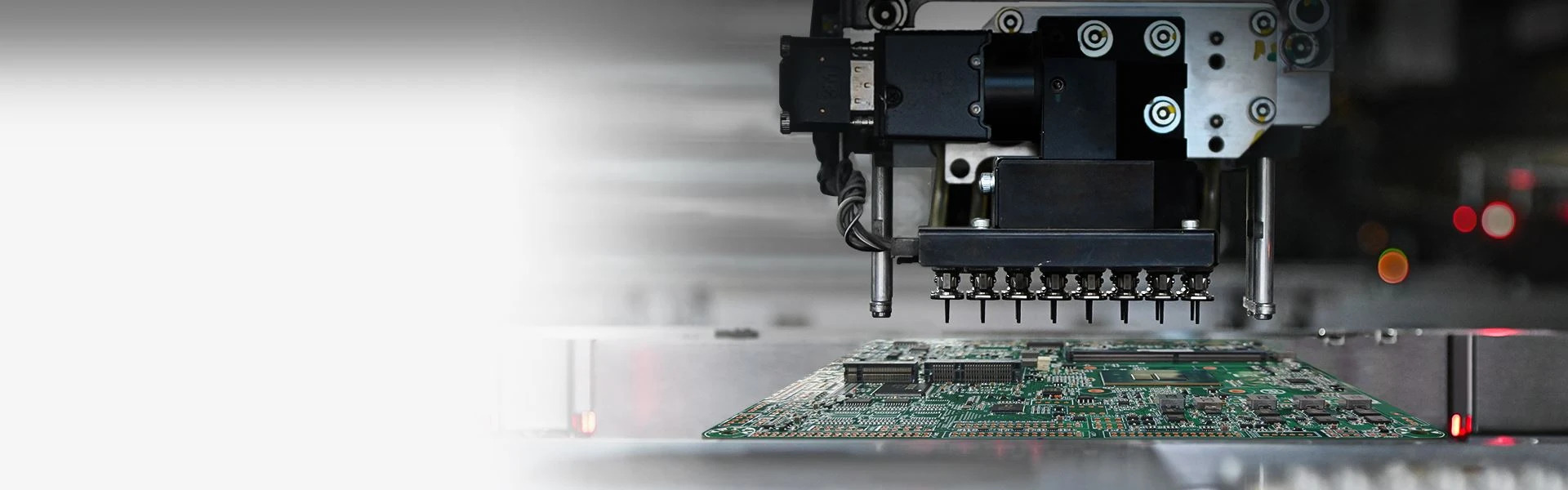
Production capabilities also play an important role in determining how effectively a sourcing service can support an electronics project. According to STHL's published company information, its manufacturing facility covers approximately 10,000 square meters and includes more than 200 employees, seven Panasonic high-speed SMT lines, two THT assembly lines, and functional testing capabilities. The company states that its facility can support both prototype and larger-scale PCBA production.
The company's manufacturing technology information also describes support for miniature components, fine-pitch BGA and QFN packages, SMT and THT assembly, functional testing, conformal coating, PCB module integration, and final product assembly. These capabilities provide a production environment in which sourced components can move from procurement into actual manufacturing and testing.
Quality management is another consideration when sourcing electronic components for PCBA projects. Components need to be properly identified, received, inspected, stored, and prepared before they enter production. For international OEM customers, traceability and material control can be particularly relevant because a manufacturing project may involve multiple suppliers, customer-supplied components, and approved alternative parts.
STHL states that its supply-chain framework covers supplier qualification, material control, inventory, logistics, risk management, and traceability. Its turnkey model can include PCB fabrication, component sourcing, assembly, testing, and packaging, while partial-turnkey production can combine customer-supplied materials with components sourced by STHL.
Testing and inspection further connect sourcing with finished-product quality. Depending on the project, electronics manufacturers may require automated optical inspection, X-ray inspection, ICT, functional testing, programming, burn-in, or other verification procedures. STHL's published manufacturing information lists AOI, X-ray, ICT, FCT, programming, final inspection, and related testing capabilities as part of its broader production workflow.
These capabilities can be particularly relevant to industries where electronics are integrated into complex or mission-specific equipment. STHL identifies industrial automation, automotive electronics, medical devices, telecommunications, renewable energy, and consumer electronics among the industries it serves. Each sector can have different requirements for component selection, PCB design, assembly processes, testing, and production documentation.
The company's Shenzhen location also places it within one of China's major electronics manufacturing ecosystems. Shenzhen has developed extensive networks covering electronic components, PCB fabrication, semiconductor-related products, industrial automation, telecommunications, consumer electronics, and contract manufacturing. For international businesses seeking Chinese electronics manufacturing partners, access to these interconnected resources can support more efficient coordination between sourcing and production.
For buyers, selecting a Components Sourcing service provider can therefore involve more than comparing component prices. Sourcing channels, BOM management, component verification, supplier qualification, alternative-part procedures, material inspection, engineering support, prototype capabilities, assembly capacity, testing, and logistics can all influence the overall manufacturing process.
An integrated service can also reduce the number of separate supplier relationships required during product development. Instead of coordinating independently with a component trader, PCB designer, prototype supplier, PCB assembler, testing provider, and final assembly company, an OEM can work with a manufacturing partner capable of managing several stages within one workflow.
Shenzhen STHL Technology Co., Ltd. follows this integrated model by combining Components Sourcing with PCB Design and Layout, PCB Prototyping, PCB manufacturing, PCB assembly, testing, and final assembly. Customers can select individual services or combine several capabilities depending on the development stage of their project. This structure can support both companies developing new products and established manufacturers managing repeat or low-volume production.
The company's public information also indicates that it supports turnkey, partial-turnkey, and consigned PCB assembly models. This gives customers flexibility in determining which materials are sourced by STHL and which are provided directly by the customer. The approach can be adapted to different procurement strategies, approved supplier requirements, inventory arrangements, and production schedules.
As electronics products become more compact, connected, and technically sophisticated, the relationship between sourcing and engineering is expected to remain important. Component availability can influence PCB design, PCB design can influence assembly requirements, and assembly requirements can influence production planning. Coordinating these elements at an early stage can provide greater visibility throughout the product development process.
The role of a Components Sourcing service is consequently expanding beyond basic procurement. For modern EMS projects, sourcing can function as a bridge between the BOM and the manufacturing line, helping ensure that components are available, verified, organized, and compatible with the production requirements. When combined with engineering, prototyping, assembly, and testing capabilities, it becomes part of a broader electronics manufacturing strategy.
With its integrated EMS and PCBA service structure, Shenzhen STHL Technology Co., Ltd. continues to participate in this evolving electronics manufacturing environment. Its combination of sourcing, PCB engineering, prototyping, assembly, testing, and final integration provides a framework for customers seeking coordinated support across different stages of hardware development and production.
About Shenzhen STHL Technology Co., Ltd.
Shenzhen STHL Technology Co., Ltd. is a Shenzhen-based EMS and PCBA manufacturer that has been operating since 2006. The company provides electronics manufacturing and engineering services for international OEM and ODM customers, with a service portfolio covering Components Sourcing, PCB Design and Layout, PCB Prototyping, PCB manufacturing, PCB assembly, testing and inspection, PCB module integration, final product assembly, logistics, and related manufacturing support. Its published industry coverage includes industrial automation, automotive electronics, medical devices, telecommunications, renewable energy, and consumer electronics.
The company supports electronics projects at different stages, from early engineering review and prototype development to pilot builds, low-volume production, repeat orders, and larger-scale PCBA manufacturing. Its Components Sourcing service can be integrated with BOM review and material preparation, while its PCB Design and Layout and PCB Prototyping capabilities provide additional support during product development. Further information about Shenzhen STHL Technology Co., Ltd., its manufacturing capabilities, sourcing services, and electronics solutions is available through its website, [www.pcba-china.com].
Address: B4, Anle Ind. Park, 172 Hangcheng Blvd, Bao'an, Shenzhen 518126, Guangdong, China
Official Website: https://www.pcba-china.com/
Jonny Xiao
Shenzhen STHL Technology Co., Ltd.
info@pcba-china.com
Legal Disclaimer:
EIN Presswire provides this news content "as is" without warranty of any kind. We do not accept any responsibility or liability for the accuracy, content, images, videos, licenses, completeness, legality, or reliability of the information contained in this article. If you have any complaints or copyright issues related to this article, kindly contact the author above.
