

Automotive Power Electronics Market to Reach USD 17.16 Billion by 2035, Growing at 12.0% CAGR
Automotive Power Electronics Market
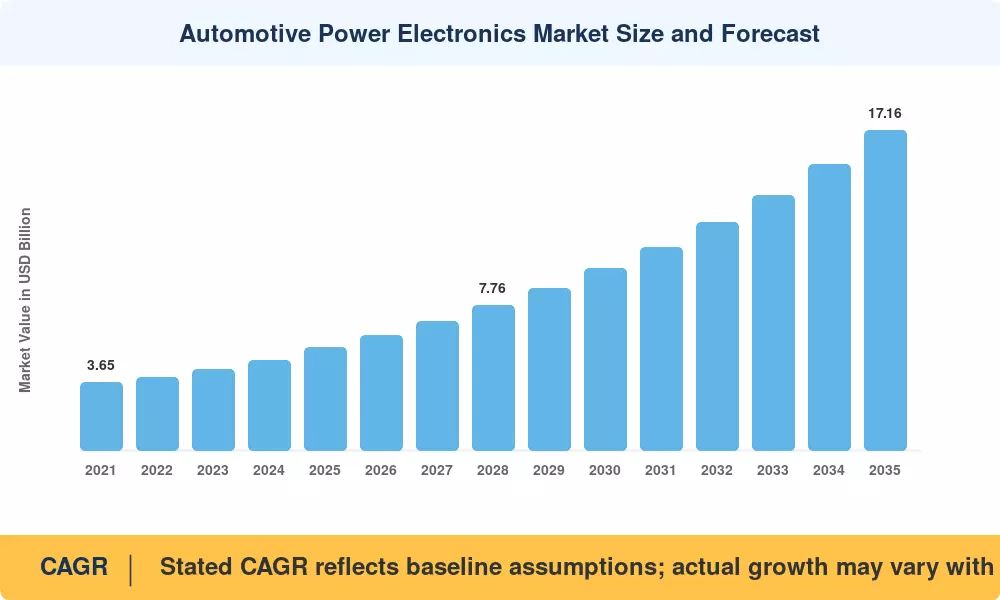
Automotive Power Electronics Market is projected to reach USD 6.19 billion in 2026, and will climb to USD 17.16 billion by 2035.
NEW YORK, NY, UNITED STATES, August 21, 2026 /EINPresswire.com/ -- According to a study from Market Research Future, Automotive Power Electronics Market is projected to reach USD 6.19 billion in 2026, and will climb to USD 17.16 billion by 2035, expanding at a 12.0% CAGR across the 2026–2035, driven by Integration of advanced semiconductor technologies.Market Overview
The Automotive Power Electronics Market represents a critical and rapidly growing segment within the global automotive industry, encompassing the development, manufacturing, and supply of electronic devices and systems responsible for controlling and converting electrical power in vehicles. Automotive power electronics form the backbone of modern vehicle electrical systems, managing power flow between batteries, motors, and various vehicle subsystems through sophisticated semiconductor devices including power modules, power integrated circuits (ICs), and discrete power devices. These components enable essential vehicle functions ranging from powertrain control and battery management to body electronics and safety systems. The integration of advanced semiconductor technologies has revolutionized automotive power electronics, enabling higher efficiency, improved performance, and reduced size and weight, making them indispensable for the electrification of vehicles and the development of increasingly sophisticated vehicle electronic systems.
The market's robust growth trajectory at a compound annual growth rate of 12.0% is underpinned by several critical drivers. The most significant driver is the accelerating electrification of the automotive industry, with electric vehicles and hybrid vehicles requiring substantially more power electronics content than conventional internal combustion engine vehicles. The transition to battery electric vehicles, plug-in hybrid electric vehicles, and hybrid electric vehicles has created unprecedented demand for power modules, on-board chargers, DC-DC converters, and other power electronics components. The increasing sophistication of vehicle electrical systems, including advanced driver assistance systems, infotainment systems, and autonomous driving features, has further expanded the demand for automotive power electronics. Furthermore, the drive for improved vehicle efficiency and reduced energy consumption has increased the demand for high-efficiency power electronics that minimize power losses.
Several significant industry trends are reshaping the Automotive Power Electronics landscape. The trend toward higher voltage systems, including 800V architectures in electric vehicles, has driven the development of power electronics capable of handling higher voltages with improved efficiency. The adoption of wide-bandgap semiconductor materials, including silicon carbide (SiC) and gallium nitride (GaN), represents a transformative trend in automotive power electronics, offering superior performance compared to conventional silicon-based devices. The trend toward integration and miniaturization of power electronics, combining multiple functions in smaller packages, is enabling more compact and efficient vehicle designs. Additionally, the trend toward functional safety and reliability in automotive power electronics, driven by safety-critical applications such as electric power steering and braking systems, has elevated the importance of robust design and manufacturing processes.
Technological developments in the automotive power electronics sector are advancing rapidly. Silicon carbide (SiC) power devices, including MOSFETs and Schottky diodes, are being increasingly adopted in electric vehicle applications due to their superior switching characteristics, high-temperature capability, and improved efficiency compared to silicon devices. Gallium nitride (GaN) power devices are emerging as a promising technology for lower-voltage applications, offering high-frequency operation and excellent efficiency. Advanced packaging technologies, including double-sided cooling, silver sintering, and direct liquid cooling, are enabling higher power density and improved thermal management. Furthermore, the development of intelligent power modules with integrated driver circuits and protection features is improving system reliability and reducing design complexity.
Government policies and regulatory frameworks play a crucial role in shaping the Automotive Power Electronics market. Emission reduction targets and zero-emission vehicle mandates across major markets are driving electric vehicle adoption and, consequently, demand for automotive power electronics. Government incentives for electric vehicle purchases and funding for electric vehicle infrastructure are accelerating the transition to electrification. Regulatory requirements for vehicle safety, including functional safety standards such as ISO 26262, are driving the adoption of reliable and safety-certified power electronics components. Furthermore, government support for semiconductor manufacturing and research, particularly in the context of supply chain security, has encouraged investment in automotive power electronics production capacity.
The demand outlook for automotive power electronics remains exceptionally strong, with projections indicating sustained robust growth throughout the forecast period. The accelerating electrification of the global vehicle parc, the increasing power electronics content per vehicle, and the expansion of electric vehicle production in emerging markets all contribute to robust demand growth. The commercial vehicle sector represents a significant growth area, with the electrification of trucks and buses creating demand for high-power electronics components. The two/three-wheeler market, particularly in Asia-Pacific, presents growing opportunities for power electronics adoption.
📍 Get Free Sample Report for Detailed Market Insights:
https://www.marketresearchfuture.com/sample_request/5013
Market Segmentation
The Automotive Power Electronics Market is comprehensively segmented to provide detailed insights into the various dimensions of this critical and rapidly evolving industry.
By Device Type: The market is segmented into Power Modules, which integrate multiple power semiconductor devices in a single package, enabling efficient power conversion and distribution. Power modules are essential for high-power applications such as traction inverters in electric vehicles and hybrid powertrains. Power ICs (Integrated Circuits) combine power devices with control, driver, and protection circuitry in a single chip, enabling sophisticated power management functions. Discrete Devices, including MOSFETs, IGBTs, and diodes, represent individual semiconductor devices used in various automotive power electronics applications. The trend toward more integrated solutions is influencing the device type market dynamics.
By Application: The market is segmented into Powertrain Systems, which represent the largest and fastest-growing application for automotive power electronics. Powertrain applications include traction inverters, on-board chargers, DC-DC converters, and battery management systems that manage power flow in electric and hybrid vehicle powertrains. Body Electronics applications include power distribution, lighting control, and motor control for body functions such as windows, seats, and wipers. Safety & Security Electronics applications include electronic power steering, anti-lock braking systems, and advanced driver assistance systems that require reliable and safety-critical power electronics.
By Vehicle Type: The market is segmented into Passenger Cars, which represent the largest and fastest-growing segment for automotive power electronics, driven by the rapid electrification of the passenger vehicle market. Commercial Vehicles, including light commercial vehicles, trucks, and buses, represent a significant growth area as the commercial vehicle sector increasingly adopts electrification and advanced electronic systems. Two/Three-Wheelers represent an important market, particularly in the Asia-Pacific region where electrification of two-wheelers and three-wheelers is advancing rapidly.
By Drive Type: The market is segmented into Battery Electric Vehicles (BEVs), which require the most extensive power electronics content, including high-power traction inverters, on-board chargers, and DC-DC converters. Plug-in Hybrid Electric Vehicles (PHEVs) require power electronics for both electric and internal combustion powertrain operation, including power management systems. Internal Combustion Engine (ICE) Vehicles require power electronics for various vehicle systems, including alternator control, start-stop systems, and body electronics. The transition toward electrification is driving growth across all drive types.
By Component: The market is segmented into Power Modules, which are essential for high-power applications in electric vehicles. On-Board Chargers convert alternating current from the grid to direct current for battery charging in electric and plug-in hybrid vehicles. DC-DC Converters convert high-voltage battery power to lower voltages for vehicle electronics and auxiliary systems. Other components include inverters, converters, and power management systems.
🛒 You can buy this market report at:
https://www.marketresearchfuture.com/checkout?currency=one_user-USD&report_id=5013
Regional Analysis
North America represents a significant and rapidly growing market for automotive power electronics, driven by the accelerating adoption of electric vehicles, strong semiconductor industry presence, and supportive government policies. The United States leads the region, with electric vehicle sales growing rapidly and substantial investments in domestic power electronics production capacity. The Inflation Reduction Act has provided significant incentives for electric vehicle and component production, including power electronics. The region's strong semiconductor industry, with major players involved in automotive power electronics, supports market growth.
Europe holds a substantial share of the global Automotive Power Electronics market, benefiting from the region's leadership in vehicle electrification and automotive technology innovation. The European Union's stringent CO2 emissions targets and the impending phase-out of internal combustion engine vehicles have created substantial demand for electric vehicles and power electronics. European automotive manufacturers have been at the forefront of developing advanced powertrain technologies, including high-performance power electronics. The region has also seen significant investment in semiconductor research and production, supporting the development of advanced power electronics technologies.
Asia-Pacific represents the largest and fastest-growing market for automotive power electronics, driven by the region's dominant position in global vehicle production and electronics manufacturing, and its leadership in electric vehicle adoption. China, the world's largest automotive market and the global leader in electric vehicle adoption, represents the largest market for automotive power electronics, with extensive domestic production capacity and substantial government support for electric vehicles. Japan and South Korea, home to major automotive, electronics, and semiconductor manufacturers, have been at the forefront of power electronics technology development. The region's strong semiconductor manufacturing ecosystem supports market growth.
Rest of the World, including South America, the Middle East, and Africa, represents emerging markets with growing power electronics adoption. While these regions currently account for a smaller share of the global market, they offer substantial long-term potential as electric vehicle adoption expands and vehicle electrification increases.
Competitive Landscape
The Automotive Power Electronics market features intense competition among a diverse range of global players, including established semiconductor manufacturers, automotive suppliers, and specialized power electronics companies. Key players include Infineon Technologies AG, ON Semiconductor Corporation, STMicroelectronics N.V., NXP Semiconductors, Texas Instruments Incorporated, Rohm Co., Ltd., Fuji Electric Co., Ltd., Mitsubishi Electric Corporation, Bosch GmbH, and Continental AG. These companies compete on factors including power semiconductor technology, device performance, manufacturing capability, cost competitiveness, and relationships with automotive manufacturers and tier-1 suppliers.
Strategic developments in the market have been characterized by significant investment in wide-bandgap semiconductor technologies, including silicon carbide and gallium nitride. Major semiconductor manufacturers have announced substantial investments in SiC production capacity, establishing dedicated manufacturing facilities and expanding production capabilities. Strategic partnerships between semiconductor companies, automotive manufacturers, and tier-1 suppliers have become increasingly important for developing and commercializing advanced power electronics solutions.
Market positioning varies among players, with some companies focusing on specific power semiconductor technologies or applications, while others offer comprehensive power electronics portfolios covering multiple device types and vehicle applications. The ability to provide integrated power electronics solutions, including power modules with integrated drivers and protection features, has become increasingly important for suppliers seeking to capture greater value.
Latest Industry News & Developments
Recent developments in the Automotive Power Electronics industry highlight the rapid pace of innovation and the strategic moves by leading players. Major semiconductor manufacturers have announced significant investments in silicon carbide production capacity, including the establishment of dedicated SiC manufacturing facilities and expanded production capabilities. These investments reflect the growing demand for SiC power devices in automotive applications and the recognition of wide-bandgap semiconductors as a strategic technology.
The industry has witnessed significant advancements in power module packaging and thermal management, with new technologies enabling higher power density and improved reliability. Advances in packaging materials and processes, including silver sintering and double-sided cooling, are enabling power modules that can handle higher temperatures and power levels.
Another significant development is the increasing focus on automotive functional safety standards in power electronics, with companies developing safety-certified power electronics components that meet the rigorous requirements of ISO 26262. The development of intelligent power modules with integrated diagnostics and protection features is improving system reliability and safety.
Market Challenges & Opportunities
Despite the strong growth prospects, the Automotive Power Electronics market faces several significant challenges. The high cost of wide-bandgap semiconductor devices, particularly silicon carbide and gallium nitride, compared to conventional silicon devices, remains a barrier to adoption, particularly in cost-sensitive vehicle segments. The complexity of power electronics design, including thermal management, electromagnetic compatibility, and reliability, requires substantial engineering expertise. The semiconductor supply chain challenges that have affected the automotive industry underscore the importance of supply chain resilience and diversification.
However, these challenges are accompanied by substantial opportunities. The transition to electric vehicles presents the most significant opportunity for automotive power electronics, as electric vehicles require substantially more power electronics content than conventional vehicles. The development of advanced power semiconductor technologies, including next-generation silicon carbide and gallium nitride devices, offers opportunities for improved performance, efficiency, and cost reduction.
Emerging opportunities also exist in the areas of integrated power modules, which combine multiple functions in compact packages, reducing system complexity and cost. The development of power electronics for autonomous vehicles, including redundant power systems and advanced power management, presents new growth opportunities. The expansion of electric vehicle charging infrastructure creates opportunities for power electronics in charging systems.
To explore more market insights, visit us at:
https://www.marketresearchfuture.com/reports/automotive-power-electronics-market-5013
Final Market Summary
The Automotive Power Electronics Market is on a strong growth trajectory, projected to increase from USD 6.19 Billion in 2026 to USD 17.16 Billion by 2035, reflecting a compound annual growth rate of 12.0%. This robust growth reflects the fundamental transformation of the automotive industry toward electrification and the increasing electronic content of modern vehicles.
The long-term industry potential remains substantial, driven by the continued electrification of the global vehicle parc, the increasing power electronics content per vehicle, and the ongoing advancement of semiconductor technologies. The transition to wide-bandgap semiconductor technologies, including silicon carbide and gallium nitride, will be a key driver of market evolution, enabling higher efficiency, improved performance, and reduced system cost.
Looking ahead, the market is expected to evolve with the development of more integrated and intelligent power electronics solutions, the adoption of advanced packaging and thermal management technologies, and the expansion of power electronics applications in electric vehicles and autonomous driving systems. The competitive landscape will likely see continued investment in wide-bandgap semiconductor production, strategic partnerships, and consolidation as companies seek to position themselves for success in this critical and growing market. Organizations that successfully develop and deploy advanced power electronics solutions that meet the demanding requirements of modern vehicles will be well-positioned to capture significant value in this essential industry, contributing to the broader goal of sustainable and efficient transportation.
More Related Reports from MRFR Library:
Electric Vehicle Charging Infrastructure Market : https://www.marketresearchfuture.com/reports/electric-vehicle-ev-charging-infrastructure-market-16207
Mobility Technology Market : https://www.marketresearchfuture.com/reports/mobility-technology-market-16211
US Automotive Service Market : https://www.marketresearchfuture.com/reports/us-automotive-service-market-16248
US Fleet Management Market : https://www.marketresearchfuture.com/reports/us-fleet-management-market-16431
US Auto Parts Market : https://www.marketresearchfuture.com/reports/us-auto-parts-market-17207
US Electric Vehicle EV Charging Infrastructure Market : https://www.marketresearchfuture.com/reports/us-electric-vehicle-charging-infrastructure-market-17222
Europe Shared Mobility Market : https://www.marketresearchfuture.com/reports/europe-shared-mobility-market-17789
Automotive E Axle Market : https://www.marketresearchfuture.com/reports/automotive-e-axle-market-17802
US Tractor Market : https://www.marketresearchfuture.com/reports/us-tractor-market-17867
US Dump Truck Market : https://www.marketresearchfuture.com/reports/us-dump-truck-market-18109
Larry Wilson
WantStats Research And Media Pvt. Ltd.
+1 855-661-4441
email us here
Legal Disclaimer:
EIN Presswire provides this news content "as is" without warranty of any kind. We do not accept any responsibility or liability for the accuracy, content, images, videos, licenses, completeness, legality, or reliability of the information contained in this article. If you have any complaints or copyright issues related to this article, kindly contact the author above.
